For a long time, many halal diners treated a great steak as something they could only enjoy at home. Finding a restaurant that served certified halal beef, cooked properly and without cross-contact, often took real effort.
That’s changing. Today, more halal restaurants are putting quality cuts on the menu. But choosing the right steak still raises questions. Should you order the strip loin or the filet mignon? What does AAA actually mean? And how do you know whether to ask for medium-rare or medium?
This halal steak guide answers all of that. We’ll explain what makes a steak halal, how Canadian beef grading works, how the two most popular cuts compare, and how to choose your ideal doneness. By the end, you’ll order your next steak with confidence.
What Makes a Steak Halal?
A steak is halal when the beef comes from an animal raised, slaughtered, and processed according to Islamic dietary law. But the slaughter is only part of the picture. The way the steak is stored, seasoned, and cooked matters too.
A halal steak should meet these conditions:
- Halal slaughter. The animal must be slaughtered according to Islamic requirements.
- No cross-contact. The steak should never share a grill, pan, or utensils with pork or non-halal meat.
- Halal seasonings and sauces. Marinades, butters, and sauces must be free of alcohol and non-halal ingredients. Some steak sauces and glazes use wine, brandy or bourbon.
- A traceable certification. The supplier, and ideally the restaurant, should be able to name its halal certifier.
How Zabiha Halal Meat Is Prepared
Many diners want to understand how Zabiha halal meat is prepared before they order. Zabiha is the Islamic method of slaughter. In general terms, it involves:
- A healthy, living animal of a permitted species, such as cattle
- A Muslim slaughterer who invokes the name of God at the time of slaughter
- A very sharp knife and a swift cut to the throat that severs the main blood vessels
- Draining the blood from the carcass
Standards and interpretations can differ between certifiers, especially on questions such as stunning before slaughter. For a deeper explanation, read our guide to understanding Zabiha halal standards and food practices.
When you buy packaged halal beef in Canada, check the label. Under federal rules, a halal claim on a label or advertisement must include the full name of the person or body that certified it. When dining out, our checklist on how to verify halal certification can help you ask the right questions.
Understanding Canadian Beef Grades: What AAA Means
When you see “AAA” on a menu, it refers to the Canadian beef grading system. According to the Canadian Beef Grading Agency, which is accredited by the Canadian Food Inspection Agency, Canada’s top quality grades are:
| Grade | Marbling Level |
|---|---|
| Canada Prime | Slightly abundant |
| Canada AAA | Small |
| Canada AA | Slight |
| Canada A | Trace |
Marbling refers to the thin streaks of fat inside the muscle. As a steak cooks, marbling melts into the meat, adding flavour, juiciness and tenderness. More marbling generally means a richer eating experience.
Grading also considers other factors. These top grades apply to youthful cattle, and the fat must be firm and free of a yellow tinge.
So, what does that mean for AAA halal steaks? AAA beef has a good level of marbling, which is why it’s a popular choice for restaurant steaks. It offers a rich, juicy bite at a more accessible price than Prime. Note that grading describes quality only. Whether a steak is halal depends on how the animal was slaughtered and handled, not its grade.
Meet the Cuts
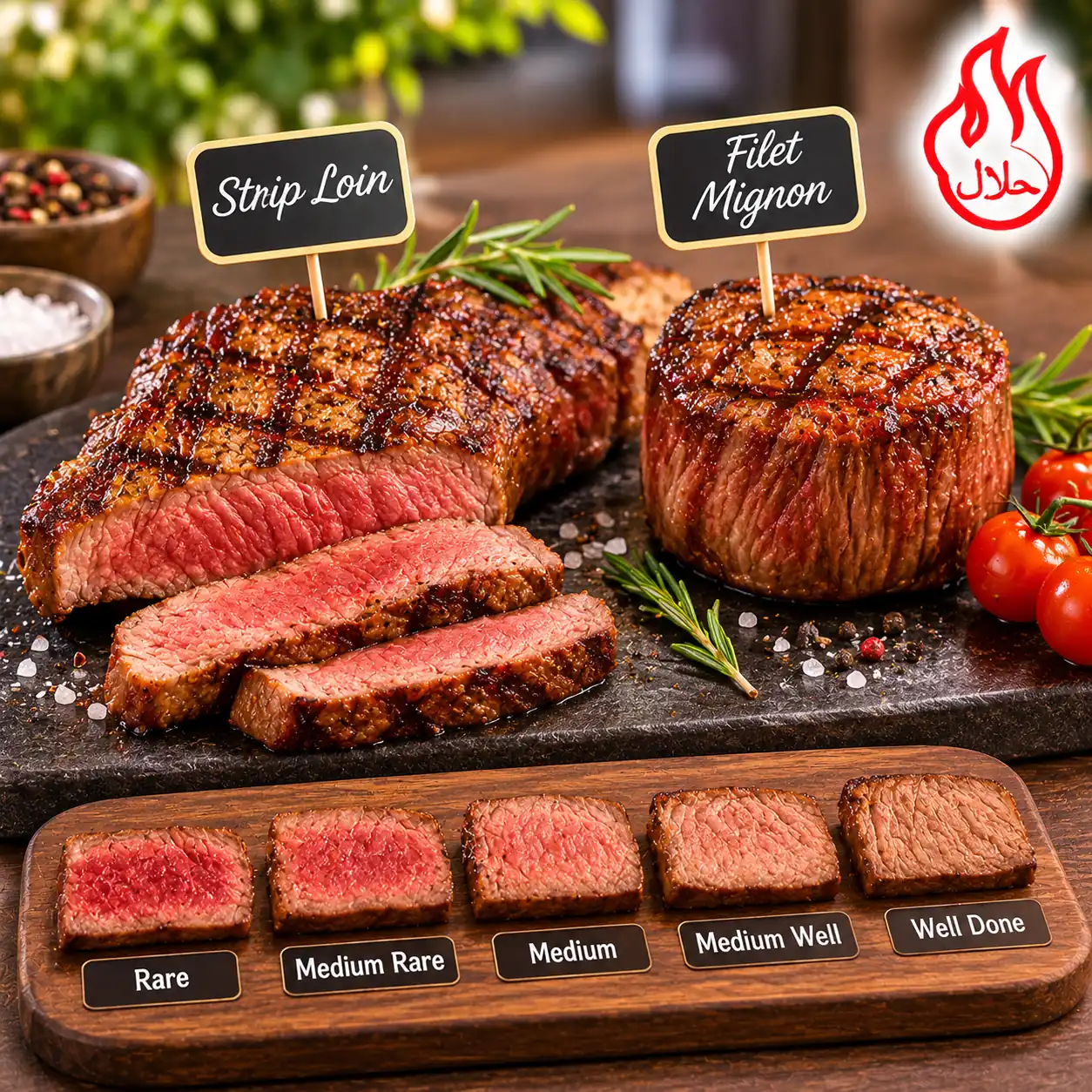
Canadian Strip Loin
The Canadian strip loin comes from the short loin, a muscle along the back of the animal that doesn’t do much work. In Canada, you’ll often see it called simply “strip loin” or “striploin.” In other places, it may be called a strip loin or strip loin.
What to expect:
- Flavour: Bold and beefy, thanks to good marbling
- Texture: Tender, with a pleasant, slightly firm bite
- Fat: Often has a strip of fat along one edge, which adds flavour as it cooks
- Shape: Usually a wide, relatively flat steak
The strip loin is a favourite among steak lovers who want deep beef flavour without the heaviness of a very fatty cut.
Filet Mignon
Filet mignon is cut from the tenderloin, a long, narrow muscle that sits beneath the spine and does very little work. That’s why it’s known as the most tender cut of beef.
What to expect:
- Flavour: Mild and delicate
- Texture: Extremely tender, often described as melt-in-your-mouth
- Fat: Very lean, with little marbling
- Shape: A thick, round medallion
Because the tenderloin makes up only a small part of the animal, filet mignon is usually the more expensive of the two cuts.
Filet Mignon vs. Strip Loin: Side by Side
Here’s how the filet mignon vs. strip loin comparison stacks up.
| Feature | Canadian Strip Loin | Filet Mignon |
|---|---|---|
| Cut from | Short loin | Tenderloin |
| Tenderness | Tender | Most tender |
| Flavour | Bold, beefy | Mild, delicate |
| Marbling | Moderate to good | Low |
| Texture | Slight chew | Very soft |
| Typical price | Lower | Higher |
| Best for | Flavour lovers | Tenderness lovers |
Neither steak is “better.” They simply offer different experiences.
Which Cut Should You Choose?
Think about what you value most in a steak.
Choose the Canadian strip loin if:
- You love rich, beefy flavour.
- You enjoy a little texture in every bite.
- You prefer medium-rare to medium doneness, which lets the marbling melt.
- You want great flavour at a slightly lower price.
Choose filet mignon if:
- Tenderness matters most to you.
- You prefer a milder taste.
- You like a leaner cut.
- You’re celebrating a special occasion and want something a little more indulgent.
Still undecided? If you’re dining with someone, order one of each and share. It’s the easiest way to discover your favourite.
Steak Doneness Explained
Choosing your steak doneness is just as important as choosing the cut. Here’s what each level looks like inside:
| Doneness | What the Centre Looks Like | Texture |
|---|---|---|
| Rare | Cool to warm, deep red | Very soft |
| Medium-rare | Warm, red to pink | Soft and juicy |
| Medium | Pink throughout the centre | Slightly firmer |
| Medium-well | Mostly brown, with a hint of pink | Firm |
| Well done | Brown throughout | Firm and less juicy |
What does Health Canada recommend?
Health Canada’ssafe internal cooking temperatures list these targets for beef steaks and other whole cuts:
- Medium-rare: 63°C
- Medium: 71°C
- Well done: 77°C
Health Canada also notes that mechanically tenderized beef should reach at least 63°C and be turned over at least twice during cooking. Ground beef has a higher safe temperature of 71°C, because grinding spreads surface bacteria through the meat.
Use these temperatures as your guide, particularly when cooking at home. As this halal steak guide shows, doneness is about more than colour. A digital thermometer is the most reliable way to check.
Matching Doneness to the Cut
Different cuts shine at different levels of doneness.
Canadian strip loin: Medium-rare to medium is the sweet spot. This gives the marbling enough heat to melt and flavour the meat, while keeping it juicy. Cooked well-done, a strip loin can become firm and lose some of its juiciness.
Filet mignon: Medium-rare is a popular choice. Because filet is so lean, it has little fat to keep it moist at higher temperatures. If you prefer your steak more cooked, filet still stays tender, but expect a firmer, drier result.
Prefer well-done? That’s a completely valid choice, and many diners enjoy steak this way. Ask for it well-done, and consider pairing it with mushroom gravy or a sauce to add moisture.
What to Pair With Your Steak
A great steak deserves great sides. Popular pairings include:
- Fries. The classic partner. Try truffle Parmesan fries for something special.
- Sautéed mushrooms. Earthy mushrooms complement beef perfectly.
- Mushroom gravy. Adds richness, especially to leaner filet or well-done steaks.
- Caesar or Greek salad. A fresh, crisp contrast to the rich meat.
- Poutine. A hearty Canadian side for big appetites.
- Sweet potato fries. Slightly sweet, with a crisp edge.
For drinks, alcohol-free options like sparkling water, lemonade, or a cold soda refresh the palate between bites.
You can view our steaks, sides, and add-ons on our full halal menu.
Tips for Cooking Halal Steak at Home
Want to try a halal steak at home? Follow these tips:
- Buy from a trusted halal butcher. Ask who certifies the meat, and check the label for the certifier’s name.
- Pat the steak dry. A dry surface browns better and develops more flavour.
- Season simply. Salt and pepper are often all you need. Add garlic or herbs if you like.
- Use high heat. A very hot cast-iron pan or grill gives the best sear.
- Use a thermometer. Insert it into the thickest part of the steak, and check against Health Canada’s recommended temperatures.
- Rest the steak. Let it sit for about five minutes before cutting, so the juices settle.
- Slice against the grain. This makes every bite more tender, especially with strip loin.
- Keep it halal. Use clean pans and utensils that haven’t touched non-halal meat.
A Halal Steakhouse Experience in Richmond Hill
You don’t need a dedicated halal steakhouse to enjoy a properly cooked, certified halal steak. What matters is a fully halal kitchen, quality beef and a team that cooks to your preference.
At Toppings, our menu features two AAA steaks:
- Strip Loin: 8 oz AAA strip loin, grilled to your preference and served with fries
- Filet Mignon: 8 oz AAA filet mignon, grilled to your preference and served with fries
All of our meat and ingredients are 100% halal-certified and sourced from trusted suppliers. Our certification is available on request. Our menu also includes other beef favourites, such as East African Short Ribs and Mishkaki tenderloin skewers.
For group celebrations, business dinners and special occasions, our halal catering services offer menu options for sharing with family, friends or colleagues. Contact our team to discuss your guest count, menu preferences and event requirements.
Planning a dinner for two, a family celebration or a night out with friends? Reservations are recommended. You can reserve a table by getting in touch with our team or through OpenTable. You’ll find us at 1285 Elgin Mills Road East in Richmond Hill.
Conclusion
Choosing the right steak comes down to the experience you prefer. Canadian strip loin offers bold, beefy flavour and a satisfying bite, while filet mignon is prized for its exceptional tenderness and delicate taste. Understanding Canadian AAA beef grading and steak doneness also helps you make a more informed choice.
At Toppings in Richmond Hill, you can enjoy 8 oz AAA strip loin and filet mignon, prepared in a fully halal kitchen and cooked to your preference. Whether you’re planning a dinner for two, a family gathering, or a group event, our team can help you choose the right menu.
Ready to enjoy a halal steak or arrange catering for your next occasion? Contact Toppings to ask about our steaks, discuss catering options, and plan your visit.
Frequently Asked Questions
What is the difference between strip loin and filet mignon?
Strip loin comes from the short loin and offers bold, beefy flavour with good marbling. Filet mignon comes from the tenderloin and is the most tender cut, with a milder taste and less fat.
Which is more tender, filet mignon or strip loin?
Filet mignon is more tender. The tenderloin muscle does very little work, which gives the filet its soft texture. Strip loin is still tender but has a slightly firmer bite.
What does AAA mean on a steak?
AAA is a Canadian beef quality grade. It means the beef has a “small” level of marbling, the second-highest level after Canada Prime. Marbling adds flavour and juiciness.
What is the best doneness for a steak?
Medium-rare is popular for strip loin and filet mignon because it keeps the meat juicy. Health Canada lists 63°C for medium-rare beef steaks and whole cuts.
Is AAA beef always halal?
No. AAA describes beef quality, not how the animal was slaughtered. A steak is halal only if it comes from a certified halal source and is prepared without cross-contact.
How is Zabiha halal meat prepared?
Zabiha involves a Muslim slaughterer invoking God’s name and making a swift cut to the throat with a sharp knife, then draining the blood. Certifiers may differ on specific details.
Can I order my steak well-done?
Yes. Restaurants that cook to your preference can prepare steak well-done. Health Canada lists 77°C for well-done beef. Pairing it with mushroom gravy can add moisture.
Do I need a reservation to dine in?
Reservations are recommended, especially on weekends. You can book through OpenTable or contact the restaurant directly to reserve a table.