A burger looks simple. It’s a patty, a bun, a few toppings, and a sauce. But if you eat halal, every one of those parts matters, and a “halal” sign in the window doesn’t always tell the full story.
So, what makes a halal burger? The short answer is that every ingredient and every step must be permissible. That covers the meat, the bun, the cheese, the sauces, and the surface it cooks on. The long answer is what this guide is for.
Below, we break down halal beef burgers, halal chicken burgers, and build-your-own options. We also cover how halal claims work in Canada, how to cook frozen patties safely at home, and how to plan burgers for a crowd. Whether you dine with us at Toppings in Richmond Hill or grill in your own backyard, you’ll know exactly what to look for.
What “Halal” Means When It Comes to Burgers
Halal is an Arabic word that means permissible. In food, it describes what Muslims are allowed to eat under Islamic dietary law. Its opposite is haram, which means forbidden.
For a burger, three rules carry the most weight:
- The animal must be a permitted species. Cattle and chickens qualify. Pork and pork by-products never do.
- The animal must be slaughtered according to Islamic requirements. This method is known as zabiha. It involves a Muslim slaughterer, the invocation of God’s name, and a swift cut that drains the blood.
- Nothing haram can be added or mixed in. That includes alcohol, pork-based ingredients, and contact with non-halal meat.
Halal is a broad category, and zabiha refers specifically to the slaughter method. Muslims and certifiers don’t always agree on details such as machine slaughter for poultry or stunning before slaughter. If you’d like a deeper look at those standards, read our guide to understanding Zabiha halal and its food practices.
A Halal Burger Is More Than the Patty
Many people assume a burger is halal as long as the meat is. In practice, several other ingredients can make a burger with a halal patty unsuitable. Here’s what to check, layer by layer.
The Meat
The patty is the foundation. Beef or chicken must come from a supplier that slaughters and processes animals to halal standards. It should also be stored and ground away from non-halal meat. Ask who certifies the supply, not just whether it’s “halal.”
The Bun
Most buns are made from flour, yeast, water, sugar, and oil. However, some commercial breads use dough conditioners or emulsifiers that can come from animal sources. A halal kitchen sources buns with ingredients it can verify.
The Cheese
Cheese is one of the most overlooked ingredients. Traditional cheesemaking uses rennet, an enzyme that can come from animals. Many halal-conscious diners look for cheese made with microbial or vegetable-based enzymes, or cheese that is certified halal.
The Sauces
Some sauces and glazes contain wine, beer, mirin, or alcohol-based flavourings. Others may use gelatin or animal fats. Even a classic burger sauce deserves a quick ingredient check.
The Bacon
Traditional bacon is pork, so it’s never halal. Halal burger spots typically use beef bacon or turkey bacon instead. It brings a similar smoky, salty bite without the haram ingredient.
The Grill, Fryer and Utensils
Cross-contact is a real concern. If a grill or fryer also cooks pork, the burger is no longer halal for many Muslims. Fries cooked in shared oil raise the same question. A fully halal kitchen avoids this problem entirely, because nothing haram enters the building.
How Halal Claims Work in Canada
Canada does not have a single government halal standard, and the federal government does not certify food as halal. Instead, private certification bodies inspect suppliers and kitchens against their own published standards.
There is one important federal rule, though. Under the Food and Drug Regulations, a food can only carry a halal claim on its label, packaging or advertising if the full name of the certifying person or body appears with it. A logo or acronym alone isn’t enough. You can read the details in the Canadian Food Inspection Agency’s guidance on method of production claims, including halal.
What does this mean for you as a diner? It means a real halal claim should always lead back to a named certifier. If a restaurant can’t tell you who certifies its meat, that’s a reason to ask more questions.
The Halal Beef Burger: What to Look For
The beef burger is the classic for a reason. A great halal beef burger comes down to three things: certified meat, the right fat content, and proper cooking.
Fat content and grind. Many burger cooks prefer ground beef with roughly 15 to 20 per cent fat. Fat carries flavour and keeps the patty juicy on a hot grill. Very lean beef can dry out quickly.
Patty size. A thicker patty stays juicy and is easier to cook evenly. Our beef patties are 5 oz, which gives you a satisfying bite whether you order a single or stack two.
Seasoning. Good halal beef doesn’t need much. Salt, pepper, and a balanced spice blend let the meat shine.
Cooking temperature. Ground beef needs more care than a steak, because grinding spreads surface bacteria through the meat. Health Canada recommends cooking ground beef to an internal temperature of 71°C (160°F). For burgers, it suggests inserting the thermometer through the side of the patty. You’ll find the full chart on Health Canada’s safe internal cooking temperatures page.
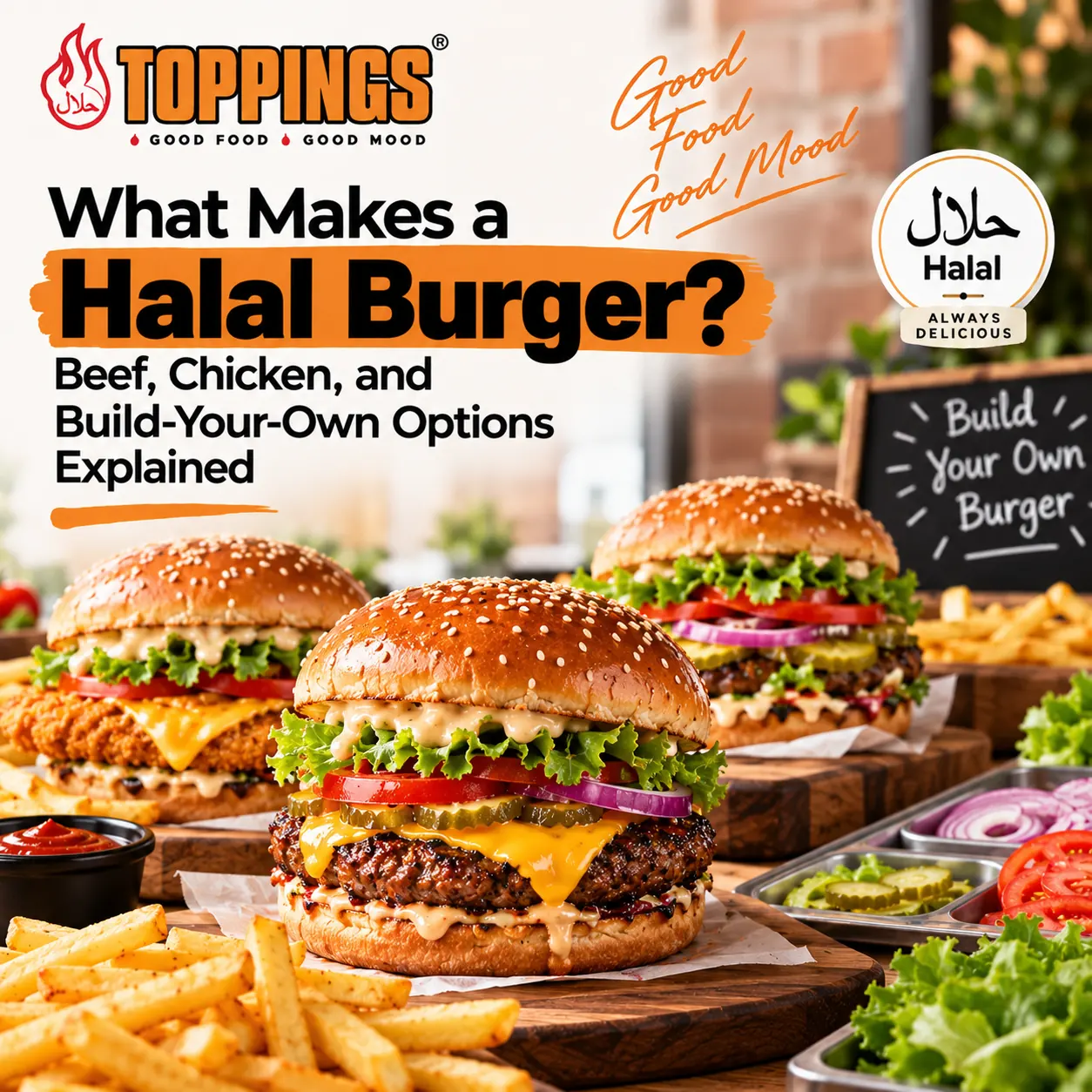
On our menu, beef lovers can start with the Classic Beef Burger or add cheese for the Cheese Burger. If you’re hungrier, the Double Cheese Burger and the Bacon Cheese Burger use two patties, and the bacon is beef. The Triple Double stacks two patties, two portions of beef bacon, and two slices of cheese. For heat, the Homicide Burger pairs a beef patty with our house Homicide sauce.
Halal Chicken Burgers: Grilled, Crispy and Spiced
Chicken burgers give you more variety in texture and flavour. They’re also a lighter option for some diners, especially when grilled.
Because chicken burgers are usually made with whole breast meat, they cook a little differently from ground patties. Health Canada recommends 74°C (165°F) for poultry pieces such as breasts, and the same temperature for ground poultry.
Here’s how the main styles compare:
- Grilled chicken: Marinated breast cooked over direct heat. It’s lean, smoky, and pairs well with fresh toppings.
- Crispy chicken: Breaded and fried for crunch. In a halal kitchen, the fryer oil must never be shared with non-halal products.
- Spiced chicken: Jerk, Nashville-style, or chipotle seasonings bring heat and depth.
At our restaurant, the Grilled Chicken Burger and Crispy Chicken Crunch keep things classic with mayo, lettuce, tomato and onions. The Spicy Chicken Crunch uses Nashville-spiced crispy chicken with spicy mayo, pickles, and jalapeños. Jerk fans can choose the Jerk Chicken Burger or the Tropical Burger, which adds grilled pineapple, BBQ sauce, and coleslaw, while the Chicken Chipotle Burger brings smoky chipotle heat. Love bold chicken flavours? Try our halal chicken wings too.
Halal Beef and Chicken Burgers Side by Side
This brings us back to the central question of what makes a halal burger. Whether you choose beef or chicken, the halal rules stay the same: certified meat, verified ingredients, and a kitchen free of cross-contact. The differences lie in flavour, texture, and cooking.
| Feature | Halal Beef Burger | Halal Chicken Burger |
|---|---|---|
| Typical cut | Ground beef patty | Whole breast, grilled or breaded |
| Flavour | Rich, savoury, beefy | Mild, takes on marinades and spices well |
| Safe internal temperature | 71°C (160°F) for ground beef | 74°C (165°F) for poultry |
| Best toppings | Cheese, caramelized onions, beef bacon, pickles | Coleslaw, jalapeños, pineapple, spicy mayo |
| Halal checkpoints | Certified beef, halal cheese, no pork bacon | Certified chicken, dedicated fryer oil, halal breading |
If you can’t decide, you don’t have to. Many diners order halal beef and chicken burgers for the table and share. It’s an easy way to try both.
Build-Your-Own: Choosing Your Burger Toppings, Sauces and Add-Ons
Build-your-own burgers are popular because they let everyone eat exactly what they like. They also make it easy to manage allergies, spice levels and picky eaters. In a fully halal kitchen, you can customize freely without second-guessing each ingredient.
Start with your base. On our menu, you can build on a beef patty, a grilled chicken breast or crispy chicken.
Next, choose your burger toppings. Classic options include:
- Lettuce, tomato and onions
- Pickles
- Hot peppers and jalapeños
- Caramelized onions
Then pick a sauce. Mayo, ketchup and mustard cover the basics. For more flavour, try chipotle, peri, jerk or our Homicide sauce.
Finally, consider premium add-ons. Cheese, coleslaw, beef bacon and grilled pineapple each change the character of the burger. If you’re really hungry, you can add brisket, an extra beef patty, or grilled chicken.
A few combinations worth trying:
- Smoky classic: Beef patty, cheese, beef bacon, caramelized onions, and mustard.
- Sweet heat: Grilled chicken, pineapple, jalapeños, and jerk sauce.
- Loaded crunch: Crispy chicken, coleslaw, pickles, and chipotle.
- Big appetite: Beef patty, extra patty, brisket, cheese, and Homicide sauce.
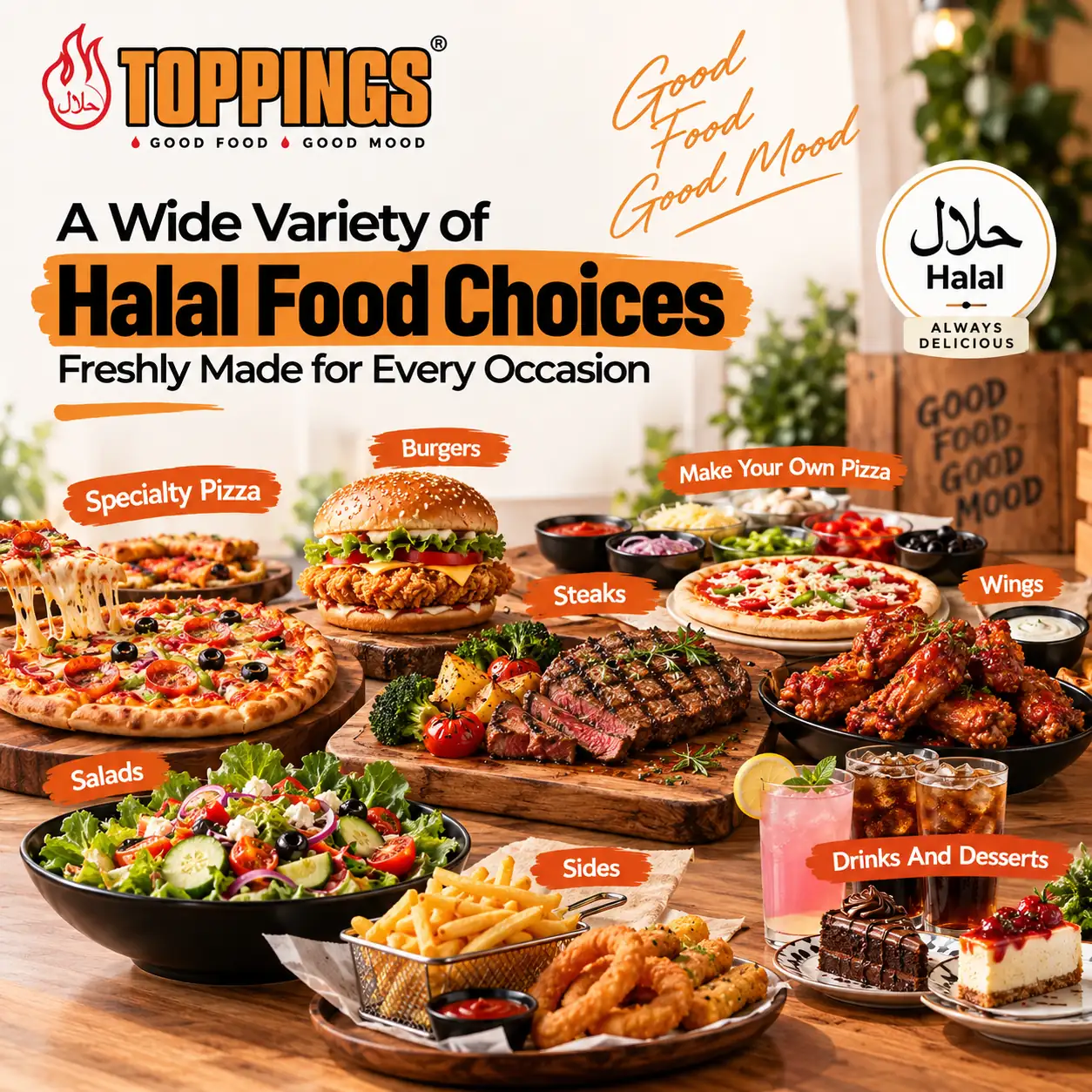
Round it out with a side. Fries, onion rings, sweet potato fries, truffle Parmesan fries, mogo, and poutine are all on the full halal menu.
Frozen Halal Burgers for Home
Sometimes you want a halal burger without leaving the house. That’s where frozen halal burgers for home come in. They’re convenient, but quality varies widely, so read the box carefully.
What to check on the package:
- The certifier’s name. As noted above, Canadian rules require the certifying body to be named alongside a halal claim.
- The ingredient list. Look for real meat and simple seasonings, without unnecessary fillers.
- Where it was made. Products made in federally inspected facilities follow Canadian food safety oversight.
- Allergen information. This matters if anyone in your home needs to avoid gluten or other allergens.
Our own Toppings frozen burgers are 5 oz seasoned beef patties. They carry the ISNA halal certification seal and a certified gluten-free seal, and they’re manufactured in a federally inspected facility. They contain no added preservatives, artificial flavours, or fillers, and you can cook them straight from frozen.
Storing and cooking frozen patties safely:
- Keep your freezer at -18°C (0°F) or lower and your fridge at 4°C (40°F) or lower, as recommended in Health Canada’s safe food storage guidance.
- Keep raw patties away from ready-to-eat food, and use separate plates and utensils for raw and cooked meat.
- Cook patties on a skillet, on a grill, or in the oven.
- Check the internal temperature with a digital thermometer. Beef patties should reach 71°C (160°F).
- Use a clean grill or pan. If your household also cooks non-halal meat, give halal patties their own cookware.
Burgers for Group Orders
Burgers are one of the easiest meals to serve a crowd. They’re familiar, filling, and easy to customize. That makes burgers for group orders a smart choice for office lunches, birthday parties, sports teams, and family gatherings.
Tips for planning a halal burger order:
- Confirm halal status for the whole menu. Sides, sauces, and desserts matter as much as the patties.
- Offer beef, chicken, and a vegetarian option. This covers most preferences in one order.
- Think about portion size. Sliders work well for parties with lots of other food. Full-size burgers suit a main meal.
- Keep sauces on the side. Guests can control spice and flavour themselves.
- Plan food safety. Hot food should stay hot, and cold food should stay cold. Health Canada’s storage guidance identifies 4°C to 60°C (40°F to 140°F) as the range where bacteria grow quickly.
- Order early. Larger orders need lead time, especially on weekends.
Our halal catering menu includes Mini Halal Sliders and Signature Halal Burgers, with a choice of chicken, beef or veggie patties. Trays come in medium (serves 5) and large (serves 10) sizes. Catering delivery starts at a minimum of six people, and a week’s notice is ideal for planning.
How to Find Halal Burgers Near Me That You Can Trust
Typing “halal burgers near me” into a search bar brings up plenty of results. Not all of them mean the same thing. Some restaurants are fully halal, while others serve one halal item next to pork on the same grill.
Use this quick checklist before you order:
- Is the whole kitchen halal, or only certain items?
- Can the restaurant name its certifier or show its certificate?
- Is the bacon beef or turkey, rather than pork?
- Is the cheese free of animal rennet, or certified halal?
- Are fryers and grills used only for halal food?
- Do any sauces contain alcohol?
A trustworthy spot will answer these questions openly. Don’t be shy about asking. Restaurants that take halal seriously expect it.
Conclusion
A great burger is about flavour, but a halal burger is also about trust. Knowing what makes a halal burger helps you look past the sign on the door and check the details that matter: certified meat, verified buns, cheese and sauces, and a kitchen with no cross-contact.
Beef or chicken, classic or fully customized, eaten at the restaurant or cooked from frozen at home, the same principles apply. Ask questions, look for a named certifier, and cook ground meat to a safe temperature.
At Toppings, all of our meat and ingredients are 100% halal-certified, and our certification is available on request. Visit us at 1285 Elgin Mills Road East in Richmond Hill, order online, or explore our halal catering services to bring burgers to your whole group.
Frequently Asked Questions
Is a burger halal if only the meat is halal?
Not always. The bun, cheese, sauces, bacon, and cooking surfaces also need to be halal. A halal patty cooked on a grill shared with pork is not considered halal by many Muslims.
Is cheese on a burger halal?
It depends on how the cheese is made. Some cheeses use animal rennet from non-halal sources. Look for cheese made with microbial or vegetable enzymes, or cheese that carries halal certification.
What is the difference between halal and zabiha?
Halal is the broad category of food that is permissible in Islam. Zabiha refers specifically to the Islamic method of slaughtering an animal. Standards and interpretations vary between certifiers, so it helps to check the certifier’s published standard.
Does the Canadian government certify halal food?
No. Private organizations certify halal food in Canada. However, the Food and Drug Regulations require any halal claim on a label, package or advertisement to include the full name of the certifying person or body.
What temperature should a halal burger be cooked to?
Health Canada recommends 71°C (160°F) for ground beef and 74°C (165°F) for ground poultry and poultry pieces. Insert a digital thermometer through the side of the patty for the most accurate reading.
Can I cook frozen halal burgers without thawing them?
Many frozen patties, including ours, are designed to cook straight from frozen. Always follow the package directions and check that the centre reaches a safe internal temperature before serving.
Are halal burgers healthier than regular burgers?
Halal is a religious standard, not a nutrition label. A halal burger’s nutrition depends on the cut of meat, fat content, toppings and cooking method. Grilled chicken with fresh vegetables is usually lighter than a double beef patty with bacon and cheese.
How many burgers should I order for a group?
Plan on one full-size burger per adult for a main meal, or two to three sliders each when other dishes are served. Add a few extra for bigger appetites, and include beef, chicken, and vegetarian options.