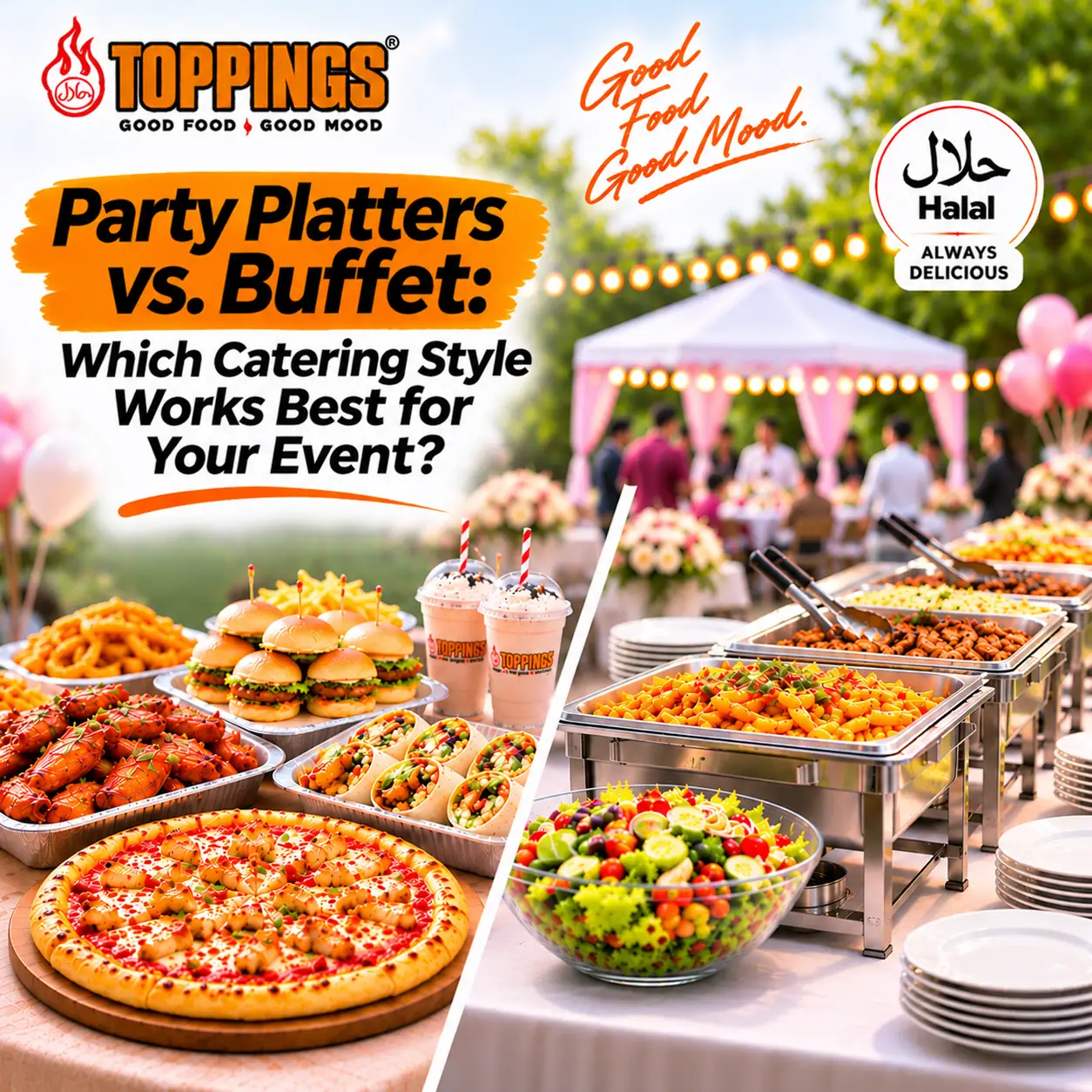
You’ve set the date, booked the venue, and sent the invitations. Now comes an important decision: Party Platters vs. Buffet which catering style will work best for your event? Whether you’re organizing a birthday, family gathering, or corporate celebration, choosing the right serving style can make all the difference. With halal party catering in Richmond Hill, you can explore food options that suit your guest count, venue, and budget.
Both serving styles can feed a crowd well, and both work for halal menus. But they suit different spaces, schedules, budgets, and guest lists. Pick the wrong one, and you could end up with long lines, cold food, or trays left half-empty.
This guide breaks down how each style works, where each one shines, and how to choose. We’ll also cover food safety, portion planning, and the questions to ask before you book a caterer.
What Are Catering Platters?
Catering platters, often called party trays, are large trays of ready-to-serve food. Each tray holds one dish, such as sliders, wings, pizza, wraps, salad or dessert. The caterer prepares and delivers them, and you set them out for guests.
Platters are usually sold by size. A medium tray might serve about five people, and a large tray about ten. You mix and match trays until you’ve covered your guest count.
Common platter options include:
- Mini sliders in beef, chicken or veggie
- Chicken wings in several flavours
- Pizza, cut into party-size slices
- Grilled chicken or BBQ platters
- Mezze platters with hummus, pita and vegetables
- Salads, fries and other sides
- Dessert boards with brownies, cookies and sweets
Platters are flexible. They work for a living room, a boardroom, a backyard or a community hall.
What Is Buffet Style Catering?
Buffet-style catering sets out a full spread of hot and cold dishes in one serving line. Guests pick up a plate and serve themselves, or move through a line where staff serve them.
A typical buffet catering setup includes:
- Several main dishes, such as grilled chicken, pasta, or lasagna
- Two or three sides and salads
- Bread or appetizers
- A dessert station
- Chafing dishes or warming trays to keep hot food hot
- Serving utensils for every dish
Buffets feel more like a full meal service. They often suit sit-down dinners, weddings, large celebrations, and corporate events where guests eat at the same time.
Platters and Buffets Side by Side
Here’s how the two styles compare on the factors that matter most.
| Factor | Party Platters | Buffet Catering |
|---|---|---|
| Best for | Casual events, mingling, grazing | Full meals, seated guests, formal events |
| Setup | Minimal; trays go straight on the table | More involved; chafing dishes, layout, utensils |
| Food variety | Wide, but usually finger foods | Wide, with more hot mains and sides |
| Guest flow | Guests graze throughout the event | Guests line up at set meal times |
| Space needed | Small; fits on a counter or table | Larger; needs a clear serving line |
| Hot food holding | Limited unless warmers are used | Built in with chafing dishes |
| Portion control | Easy; order by tray size | Harder; guests serve themselves |
| Typical cost | Often lower | Often higher, especially with service |
| Staffing | Usually none needed | May include setup or serving staff |
Neither style is “better.” The right choice depends on your event.
When Party Platters Work Best
Platters are the go-to choice when the event is relaxed, and guests are on their feet. They also make sense when space, time or budget is tight.
Choose platters if:
- Your event is casual, such as a birthday, game night, or open house.
- Guests will mingle rather than sit down for a meal.
- You’re hosting at home, in an office, or in a small venue.
- Your guest count is under 50.
- You want simple pickup or delivery with little setup.
- You’d like to control portions and costs tray by tray.
Watch out for:
- Hot items cool down if they sit out too long.
- Finger foods run out early if guests arrive hungry.
- Too many fried items and not enough lighter options.
Balance each order with at least one fresh salad or vegetable tray, one protein platter, and one dessert.
When Buffet Catering Works Best
Buffets shine when you want guests to enjoy a full, hot meal. They’re also easier to manage for large groups that eat at the same time.
Choose a buffet if:
- Your event includes a set meal time, such as dinner after speeches.
- Guests will be seated at tables.
- You’re expecting 50 or more people.
- You want a wider range of hot mains and sides.
- The occasion is formal, such as a wedding, anniversary, or gala.
- You’re holding the event at a hall or venue with space for a serving line.
Watch out for:
- Long lines at the start of service. Two-sided buffet tables help.
- Over-serving, which can leave late guests with less choice.
- The extra setup space and equipment a buffet needs.
Matching the Style to Your Event
Still unsure? The type of event usually makes the platters vs. buffet choice clearer. Use this table as a starting point.
| Event | Recommended Style | Why |
|---|---|---|
| Office meeting or lunch | Platters | Quick to set up, easy to eat between tasks |
| Kids’ birthday party | Platters | Finger foods, flexible timing, easy cleanup |
| Graduation or open house | Platters | Guests come and go over several hours |
| Eid celebration | Buffet or hybrid | Large families, full meal expectations |
| Wedding or walima | Buffet | Formal, seated, hot mains needed |
| Corporate event or launch | Either | Platters for networking, buffet for dinners |
| Community event or fundraiser | Hybrid | Large crowds, mixed timing |
The Hybrid Option: Platters Served Buffet-Style
You don’t have to choose just one. Many hosts set out catering platters along a buffet table. Guests serve themselves as they would at a buffet, but you order by the tray.
This approach works especially well for:
- Mid-sized events of 30 to 80 guests
- Events with both a mealtime and a grazing period
- Hosts who want buffet variety at platter prices
To make a hybrid work, add a few warming trays for hot items and set the trays in a logical order. Start with plates, then salads, mains, sides and finally sauces and napkins.
Wings by the Pound: A Flexible Party Staple
Wings are one of the easiest foods to plan for, whichever style you choose. Ordering wings by the pound lets you scale up or down without guessing.
On our menu, wings come in 1 lb, 2 lb, and 3 lb orders, with sauces from honey garlic and BBQ to hot and Homicide. The number of wings in a pound depends on wing size, so ask your caterer how many pieces to expect.
Tips for ordering wings for a group:
- Order a mix of mild, medium, and hot flavours.
- Request sauce on the side for longer events, so wings stay crisp.
- Add popcorn chicken or chicken tenders for kids and less adventurous eaters.
- Set out plenty of napkins and a bowl for bones.
You can browse all wing sizes, tenders, and sauces on our halal menu.
Food Safety for Platters and Buffets
Food that sits out for a long time can become unsafe, regardless of serving style. Health Canada’s holiday food safety guidance includes practical advice for buffets and parties:
- Use warming trays, chafing dishes, or slow cookers to keep hot foods hot.
- Keep cold foods cold by setting serving trays on crushed ice.
- Provide serving spoons and tongs for every dish, including finger foods.
- Don’t add fresh food to a dish already in use. Use a clean platter each time you restock.
- Throw away food left at room temperature for more than two hours.
Bacteria grow quickly between 4°C and 60°C (40°F and 140°F). Serving smaller amounts and refilling often keeps food fresher and safer, whether it’s on a platter or a buffet line.
Budgeting and Headcount
Cost is often the deciding factor. Here’s how to keep spending on track with either style.
For platters:
- Count adults and children separately. Children usually eat about half an adult portion.
- Use tray sizes to do the math. With large trays serving about ten, a 40-person event needs roughly four large trays per type of dish if each guest takes one serving.
- Mix trays rather than doubling one dish. Variety stretches further.
For buffets:
- Plan two or three mains and three or four sides.
- Ask whether pricing is per person or per tray.
- Confirm whether setup, serving staff, chafing dishes, and cleanup are included.
For both:
- Confirm your final headcount a few days before the event.
- Ask about delivery minimums and fees.
- Build in a small buffer, about 5 to 10 per cent, for unexpected guests.
Questions to Ask Your Caterer
Whichever style you choose, the right caterer makes the event easier. Ask these questions before you book:
- Do you offer platters, buffets, or both?
- What sizes do your platters come in, and how many people does each serve?
- Are setup, cleanup, and serving equipment included?
- Is there a minimum order for delivery?
- How much notice do you need?
- Can you handle allergies and dietary restrictions?
- Is all of your food halal, and who certifies it?
It’s also worth checking a caterer’s public health record. In York Region, the YorkSafe inspection program lets you look up health inspection reports for food establishments.
For a step-by-step planning checklist, read our guide to choosing the right halal catering service.
Halal Catering in Richmond Hill: Platters, Buffets and More
For Muslim families and mixed groups, the serving style matters less than what’s on the plate. Halal catering in Richmond Hill should mean every dish is halal, from the meat to the sauces, cheese, and desserts.
At Toppings, everything we serve is 100% halal, and our certification is available on request. Our party and event catering includes Mini Halal Sliders, Signature Halal Burgers, Grilled Chicken & BBQ Platters, Oven-Baked Lasagna, pizzas, wings, and a Gourmet Dessert Board. Platters come in medium (serves 5) and large (serves 10) sizes.
Our team handles setup and cleanup, and a dedicated event manager helps keep things running smoothly. You can choose pickup or delivery. For a more formal look, ask about a full buffet-style arrangement. Learn more about our party and event catering services.
Conclusion
There’s no single right answer in the platters vs. buffet debate. Platters suit casual events, smaller spaces, and guests who graze. Buffets suit seated meals, formal occasions and larger crowds. A hybrid setup gives you the best of both.
Start with your guest count, venue and event schedule. Then choose the style that keeps food fresh, lines short, and guests happy. Whatever you decide, make sure every dish meets your halal standards.
Planning an event in Richmond Hill or across the GTA? Toppings has served the community for more than 14 years. Book a free consultation through our halal catering services page, and we’ll help you choose the right style and menu for your guests.
Frequently Asked Questions
Are party platters cheaper than a buffet?
Platters are often more affordable because they need less equipment and staff. Buffets can cost more when they include chafing dishes, setup, serving staff, and more hot dishes. Always compare what each quote includes.
How many platters do I need for 50 people?
If a large platter serves about ten, plan around five large trays for each main dish category. Mixing several dishes means you can order fewer of each, since guests take smaller portions of more items.
Is a buffet better for weddings?
Buffets work well for weddings and walimas because guests are usually seated and expect a full hot meal. A buffet also offers more mains and sides than platters alone.
How long can food sit out on a buffet table?
Health Canada advises throwing away food left at room temperature for more than two hours. Use warming trays for hot food and crushed ice for cold food to keep dishes safe.
Can I combine platters and a buffet?
Yes. Many hosts set catering platters along a buffet table so guests serve themselves. This hybrid approach gives buffet-style variety while keeping ordering simple and costs predictable.
How many people does a pound of wings feed?
It depends on wing size and what else is served. As a rough guide, a pound feeds one hungry adult as a main or two to three people as part of a larger spread.
How far ahead should I book party catering?
A week’s notice is ideal for most catering orders. Book earlier for large events, weddings, Eid celebrations, and long weekends, when dates fill up quickly.
How do I know if a caterer is truly halal?
Ask who certifies the caterer, whether the whole kitchen is halal, and whether fryers are shared with non-halal food. A reliable caterer will answer openly and show its certificate on request.